
Installation-based businesses operate in a high-pressure environment. Whether you handle signage installs, commercial graphics, car wrap installation, retail fixtures, or field-based production deployments, you’re managing moving parts across locations, timelines, and crews.
Installation work is fundamentally different from shop-only production. It combines:
- Scheduling complexity
- Field coordination
- Labor tracking
- Client communication
- Change management
- Time-sensitive execution
Without centralized installation software, businesses rely on spreadsheets, emails, and whiteboards. That fragmentation causes missed updates, delayed billing, and profit loss.
This guide explains how installation management software, installation tracking software, and job progress tracking software support modern installation businesses — especially those connected to print production workflows.
Why Installation Businesses Need Specialized Software
Installation operations combine office planning with field execution. The software must connect:
- Quote creation
- Production scheduling
- Material staging
- Crew assignment
- On-site documentation
- Invoicing
Generic project management software for installers often lacks industry-specific tools like print job scheduling software integration or field-based cost tracking.
Installation businesses need systems built for:
- Real-time updates
- Mobile access
- Print workflow integration
- Resource coordination
- Labor variance tracking
Installation Management Software: Core Capabilities
Effective installation management software must handle the complete job lifecycle.
1. Quote-to-Install Workflow Integration
Many installation projects originate in production environments. For example:
- Signage fabrication
- Print graphics
- Vehicle wraps
- Retail display graphics
The system must connect estimating directly to scheduling.
When production is complete, installation management software should automatically:
- Trigger scheduling workflows
- Assign crews
- Allocate equipment
- Reserve installation dates
This eliminates duplicate data entry and miscommunication.
2. Crew Scheduling & Print Production Coordination
Installation scheduling becomes more complex when linked to production deadlines.
That’s where print production scheduling software, print scheduling software, and printing scheduling software integration becomes critical.
For example:
- Graphics must be printed before car wrap installation
- Signage must cure before mounting
- Retail displays must ship before installation
Integrated print job scheduling software ensures:
- Production timelines sync with installation dates
- Crews are not scheduled prematurely
- Deadlines are realistic
Without alignment between production and field scheduling, delays cascade across departments.
3. Installation Tracking Software for Field Visibility
Once crews are dispatched, visibility becomes critical.
Installation tracking software provides:
- Real-time job status updates
- GPS-enabled crew location tracking
- Time tracking
- Photo documentation uploads
- On-site issue reporting
Mobile access ensures installers can:
- Review job specs
- Log hours
- Submit completion confirmations
- Record change orders
Field visibility protects profit margins by reducing rework and miscommunication.
4. Job Progress Tracking Software
Installation projects often involve multiple phases:
- Site prep
- Mounting
- Electrical work
- Finishing
- Inspection
Job progress tracking software enables managers to:
- Monitor phase completion
- Identify bottlenecks
- Compare estimated vs actual labor
- Track material usage
This real-time oversight improves forecasting and accountability.
Professional support from industry experts

Aaron
Signage, Apparel & Print

Crystal
Apparel, Signage & Print

Jennifer
Signage

Craig
Signage

Hannah
Signage
Car Wrap Installation Workflow Management
Car wrap installation presents unique operational challenges:
- Large-format printing
- Surface preparation
- Temperature considerations
- Installation time variability
- Precision labor
Software must coordinate:
- Print production
- Lamination
- Cutting
- Scheduling
- Crew assignment
Because car wrap installation relies on print readiness, production and installation scheduling must operate in sync.
Without integration, crews may arrive before materials are ready — wasting labor hours and harming profitability.
Installation Software vs Generic Project Management Tools
Many businesses attempt to use generic project management software for installers.
While these tools manage tasks, they often lack:
- Print workflow integration
- Inventory tracking
- Production alignment
- Job-level costing
- Change order automation
Installation businesses require deeper operational capabilities.
Dedicated installation management software connects production, inventory, labor, and invoicing in one system.
Common Installation Business Challenges
Scheduling Conflicts
Without centralized visibility, double-booking crews is common.
Scope Changes
Field conditions change frequently. If change orders aren’t documented in real time, profit evaporates.
Delayed Billing
If job completion isn’t properly documented, invoices are delayed.
Labor Variance
Installation labor is one of the largest cost drivers. Without tracking actual vs estimated hours, margin erosion goes unnoticed.
Integrated installation tracking software solves these problems.
What to Look for in Installation Software
When evaluating systems, prioritize:
Cloud-Based Accessibility
Field crews need mobile access.
Role-Based Permissions
Different visibility for managers, field techs, and sales.
Print Scheduling Integration
Alignment between production and installation timelines.
Automated Notifications
Real-time updates between departments.
Reporting & Analytics
Track:
- Crew utilization
- Job profitability
- Labor variance
- Scheduling efficiency
Scalability
The system should support growth across multiple crews and locations.
How ShopVOX Supports Installation Operations
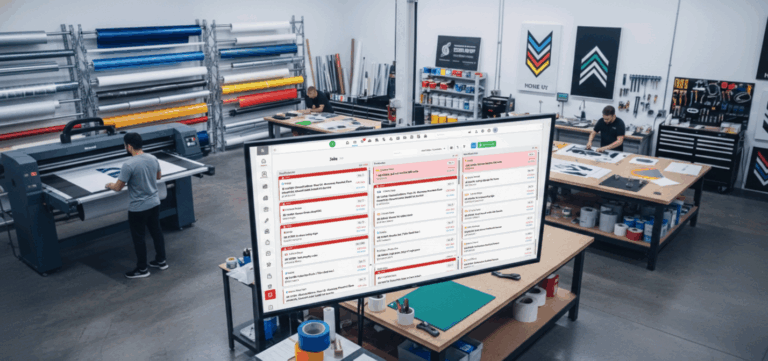
ShopVOX connects production, scheduling, and field execution into one streamlined workflow.
With ShopVOX, installation businesses can:
- Integrate print production scheduling software with crew scheduling
- Manage installation management software tools within one platform
- Track job progress in real time
- Monitor installation tracking software dashboards
- Compare estimated vs actual labor
- Automate invoicing after completion
Instead of separating production and field management, ShopVOX centralizes operations — improving coordination and protecting margins.
If you want to streamline your installation workflow and reduce scheduling chaos, contact us or start your free trial today.
Frequently Asked Questions About “Installation Software”
1. What is installation management software?
Installation management software is a centralized system that coordinates quoting, scheduling, crew dispatch, job progress tracking, and invoicing. Unlike generic tools, it integrates production timelines with field execution. It allows businesses to manage crews, allocate equipment, track labor hours, and document job completion in real time. This improves scheduling accuracy and ensures better cost control.
2. How does installation tracking software improve efficiency?
Installation tracking software provides real-time visibility into field operations. Managers can monitor crew progress, track hours worked, and document on-site changes instantly. This reduces miscommunication and prevents costly delays. It also supports faster billing because job completion is verified immediately. The result is improved operational efficiency and margin protection.
3. Why is print production scheduling software important for installers?
For businesses that install printed materials or graphics, production and installation must align. Print production scheduling software ensures materials are completed before crews are dispatched. Without this integration, scheduling conflicts and wasted labor hours occur. Synchronizing print scheduling software with installation management improves coordination and customer satisfaction.
4. Can installation software support car wrap installation businesses?
Yes. Car wrap installation requires coordination between large-format printing, lamination, cutting, and skilled installation. Installation software connects these processes, ensuring crews are scheduled only after production is complete. It also tracks labor time and job profitability. Integrated scheduling reduces downtime and improves operational reliability.
5. What should I look for in project management software for installers?
Look for systems that integrate quoting, print job scheduling software, installation tracking software, and job progress tracking software. Mobile access, real-time dashboards, labor tracking, and automated invoicing are critical. Scalability and cloud-based access ensure the platform supports growth without requiring system replacement.