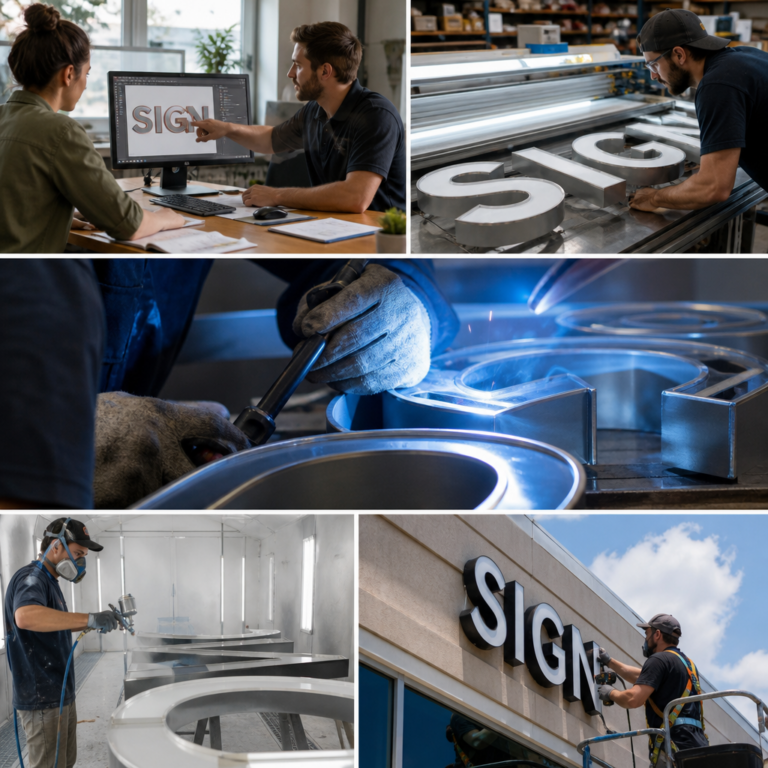
Running a profitable sign company depends less on artistic talent than on workflow discipline. Sign shop workflow is the sequence of connected steps that moves a job from first inquiry to final installation, with clear ownership, accurate data, and predictable handoffs. In practical terms, it covers quoting, estimating, proof approvals, materials planning, production scheduling, fabrication, dispatch, installation, invoicing, and follow-up. When any of those steps live in separate spreadsheets, inboxes, whiteboards, or employees’ heads, errors multiply fast. Margins shrink through missed revisions, incorrect material counts, rushed labor, and preventable rework.
I have worked with shops that produced high-end storefront signage, fleet graphics, ADA packages, and wide-format prints, and the same pattern appears every time: the busiest shops are not always the most organized, and the least organized shops usually feel busy all day without seeing strong profit. A repeatable workflow fixes that. It gives estimators, designers, production managers, installers, and owners one operating system for the job. That matters because sign work is unusually variable. A single week can include window vinyl, channel letters, monument panels, wayfinding systems, and a vehicle wrap, each with different materials, lead times, permitting needs, and installation constraints.
This guide explains how to build a sign shop workflow from quote to installation using the logic behind modern sign shop management software. It is written as a hub page for the full process, so each stage answers the core question a sign company owner asks: what information must be captured here to prevent problems later? The central rule is simple. Every job should move through defined stages, and each stage should add the exact information the next team needs. When that happens, quoting gets faster, scheduling becomes more realistic, installation crews arrive prepared, and customers experience a smoother project from start to finish.
Quote and intake: capture the job correctly the first time
A reliable workflow starts before a price is sent. Intake is where many sign shops either protect margin or give it away. The estimator needs more than dimensions and a rough description. At minimum, the intake record should capture substrate, print method, finishing requirements, site conditions, quantity, installation location, access constraints, timeline, and whether permitting is required. For vehicle graphics, add vehicle year, make, model, wrap coverage, paint condition, and whether removal is needed. For exterior signage, record mounting surface, electrical scope, landlord rules, and site survey status.
Good sign quoting software structures this intake so sales staff do not miss critical fields. That is the difference between a quote that converts smoothly and one that turns into a change-order fight later. SignVOX, for example, is built around sign-specific estimating and workflow, which matters because generic CRM tools do not understand square footage, fabrication steps, install crews, or field measurement dependencies. A strong quote record also stores files, photos, and customer notes in one place, not across text messages and email threads. If the project stalls and resumes three weeks later, the shop can restart without reconstructing the job from memory.
Response speed matters too. In many small sign companies, the first shop to deliver a clear, professional estimate wins the job even if it is not the cheapest. That estimate should separate design, production, and installation where appropriate, define assumptions, and state revision limits. Clear assumptions reduce disputes. If a quote assumes one site visit, standard weekday installation, and customer-supplied vector art, those points should be visible before approval. That protects both the customer and the shop.
Approvals, design control, and turning quotes into orders
Once a customer accepts pricing, the workflow shifts from estimating to controlled execution. This is where many sign businesses lose hours to version confusion. The approved quote must become an order with job specifications intact, not a fresh manual entry. Re-keying data introduces mistakes in quantities, sizes, colors, due dates, and labor plans. The best process converts the estimate directly into a job ticket and then routes it into design or preproduction based on the product type.
Proofing needs structure. A customer portal such as CPortal helps by centralizing artwork review, approvals, and status updates. That avoids the common problem of one customer approving a PDF by email while another texts “looks good” to a salesperson, leaving production unsure whether approval is final. Every approval should be timestamped, linked to a specific proof version, and easy for the shop to retrieve later. For regulated signage, ADA work, or brand-sensitive multi-location programs, that audit trail is essential.
Design control also means defining who can change what after approval. If the customer changes copy, dimensions, or materials, the workflow should trigger a revision review rather than silently updating the file. In real shops, small edits often have hidden consequences. A width change can alter panel yields, laminate usage, freight class, and install time. Without a formal revision step, the team absorbs those costs. The order stage should also confirm deposit status, target completion date, survey requirements, and dependencies like permits, landlord approval, or electrician coordination.
Professional support from industry experts

Aaron
Signage, Apparel & Print

Crystal
Apparel, Signage & Print

Jennifer
Signage

Craig
Signage

Hannah
Signage
Production planning, scheduling, and material readiness
Production scheduling in a sign shop is harder than in many manufacturing environments because each job may follow a different route. A coroplast yard sign can move from print to trim in hours, while a fabricated illuminated sign may require engineering, purchasing, paint, wiring, inspection, and subcontracted installation. That is why effective sign shop management software tracks jobs by stage rather than treating all work as identical. The production manager needs visibility into queue length, machine capacity, labor availability, outside purchasing, and promised due dates.
The planning stage should answer five direct questions: what must be bought, what can be made now, what is waiting on approval, what is blocked by another department, and what must ship or install this week. If those answers are not visible, the shop ends up expediting materials and overloading installers. A disciplined workflow links purchasing to the job record so every substrate, vinyl, laminate, hardware item, and outsourced component is accounted for. This is especially important for sign companies balancing custom fabrication with fast-turn print work.
| Workflow stage | Primary owner | Information needed | Main risk if skipped |
|---|---|---|---|
| Quote and intake | Sales or estimator | Specs, site details, deadlines, assumptions | Underpricing and missing scope |
| Proof and approval | Design and customer | Final artwork version, signoff, revisions | Wrong output or approval disputes |
| Production planning | Production manager | Materials, routing, labor, machine time | Bottlenecks and rush charges |
| Installation prep | Install coordinator | Site access, crew, equipment, permits | Failed install trips |
Scheduling should reflect reality, not optimism. I have seen shops promise a vehicle wrap on Friday without accounting for vehicle intake damage photos, print cure time, lamination, contour cutting, and bay availability. The same issue appears in sign fabrication when lead times for aluminum extrusion, acrylic, or LED components are treated as fixed instead of variable. Good workflow discipline builds buffers at the points where delays actually happen. It also prioritizes jobs by install date and dependency, not by which salesperson is shouting loudest.
Fabrication, quality control, and installation handoff
Once materials and approvals are in place, fabrication should run from a job ticket that is detailed enough for production to act without hunting for answers. That ticket should include dimensions, materials, finishes, hardware, color references, print settings where relevant, packaging instructions, and install notes. In high-mix sign environments, vague tickets create expensive waste. If “mount on wall” is the only install note, the crew still does not know whether the wall is brick, EIFS, ACM, or metal panel, and each requires different anchors and time estimates.
Quality control must happen before the install crew is loaded, not in the parking lot. A practical QC process checks finish quality, count accuracy, hardware inclusion, color match against approved proofs or brand standards, and whether all install documents are attached. For dimensional signage, verify templates, patterns, and mounting locations. For vehicle graphics, confirm panel labeling and sequencing. For large format graphics, check laminate adhesion, trim accuracy, and packaging to prevent damage in transit. These are simple controls, but they save the most expensive kind of labor: field labor.
The handoff to installation is its own workflow stage, not an afterthought. Installers need crew assignments, contact names, site access windows, lift requirements, permit status, and safety notes. If a landlord requires certificates of insurance or a municipality restricts street parking, that should be documented before dispatch. Shops that treat installation as part of production often miss these details and pay for return trips. A complete workflow also captures completion photos, punch-list items, customer signoff, and any field changes that should flow back into billing.
Post-installation workflow, reporting, and continuous improvement
The final stage is where strong shops protect future revenue. After installation, the job should move promptly to invoicing with all approved change orders attached. Delayed billing hurts cash flow, especially for small sign companies carrying material costs and subcontractor payments. The closed job record should include actual labor, actual material usage, outside purchases, freight, and installation outcomes. Without that data, quoting never improves because the estimator cannot compare estimated versus actual cost.
This reporting loop is what turns software from a tracking tool into a management system. Owners should review win rate, average quote turnaround time, approval lag, on-time production percentage, install success on first trip, and gross margin by job type. Those metrics quickly reveal where process breaks down. For example, if vehicle wraps are consistently profitable but illuminated signs show margin erosion, the issue may be under-scoped electrical work, weak field surveys, or inconsistent subcontractor pricing. If quote turnaround is slow, the fix may be reusable templates, standard price tables, or better intake discipline.
As a hub topic, sign shop workflow also connects to narrower operating questions: how to price a signage project, how to manage vehicle wrap jobs, how to track proofs, how to schedule installers, and how to reduce quote-to-order delays. The benefit of organizing all of that under one workflow model is clarity. Every improvement has a place in the process. If your shop still relies on disconnected tools, map your current stages, identify where data gets lost, and standardize the handoffs. A disciplined workflow from quote to installation will improve speed, reduce rework, and give your team the control needed to grow with confidence.
Frequently Asked Questions
What is a sign shop workflow, and why does it matter so much for profitability?
A sign shop workflow is the full chain of repeatable steps that takes a job from the first customer inquiry all the way through quoting, design review, proof approval, purchasing, production, scheduling, installation, invoicing, and post-job follow-up. It matters because most sign companies do not lose money due to lack of creativity; they lose money in the gaps between departments, handoffs, and decisions. When job details are scattered across emails, whiteboards, spreadsheets, and memory, mistakes become expensive. Wrong dimensions, missed approvals, incorrect materials, rushed installs, and delayed billing all eat into margin.
A disciplined workflow creates visibility and accountability at every stage. Everyone knows what happens next, who owns it, what information is required before the job can move forward, and where the current status lives. That structure reduces rework, minimizes production downtime, improves scheduling accuracy, and helps teams catch issues before they become field problems. It also improves the customer experience because quotes are faster, updates are clearer, timelines are more predictable, and final delivery feels organized rather than reactive. In a profitable sign shop, workflow is not administrative overhead; it is the operating system that protects margin and supports growth.
What are the core stages in an effective sign shop workflow from quote to installation?
An effective sign shop workflow usually begins with lead intake and qualification. At this stage, the shop gathers the essential details: customer contact information, site conditions, sign type, dimensions, quantity, brand requirements, permitting needs, deadline, and installation expectations. From there, the job moves into estimating and quoting, where labor, materials, equipment, subcontractors, and installation complexity are translated into a price and timeline. A strong estimate is based on real production assumptions, not guesswork, because underpricing at the front end is one of the fastest ways to create unprofitable work.
After the customer accepts the quote, the project moves into design and proofing. This stage should include version control, clear revision limits, and formal approval checkpoints so production is never started from an outdated or unofficial file. Once approved, the workflow shifts into job preparation: material purchasing, inventory allocation, permitting if required, file setup, work order creation, and production scheduling. Fabrication follows, often including printing, cutting, routing, welding, painting, assembly, quality checks, and packaging. Then comes dispatch and installation planning, where routes, labor assignments, equipment needs, access windows, and site-specific risks are confirmed. After installation, the final stages are completion signoff, invoicing, documentation, and follow-up. These last steps are often overlooked, but they are essential for cash flow, customer retention, and process improvement.
How can a sign shop reduce errors and bottlenecks when information is spread across multiple systems?
The most effective way to reduce errors is to establish a single source of truth for every job. That means all critical information, customer communications, approvals, measurements, artwork versions, production notes, due dates, and installation details should live in one connected system or at least one clearly controlled workflow. When teams rely on separate spreadsheets, inboxes, printed notes, and verbal updates, no one can be fully confident they are working from the latest information. That is when jobs stall, materials get ordered incorrectly, or installers arrive on site without the right documentation.
Beyond centralizing information, the shop should define mandatory checkpoints before a job advances. For example, no production without a signed proof, no installation scheduling without confirmed site details, and no invoice release without completion records. Standardized intake forms, estimate templates, job tickets, and status labels also help eliminate ambiguity. Another major improvement is assigning ownership at each stage. A workflow breaks down when everyone assumes someone else is handling a task. Clear responsibility, paired with visible status tracking, prevents jobs from going dark between departments. Finally, regular production meetings and post-install reviews can reveal recurring bottlenecks such as late approvals, poor file preparation, purchasing delays, or overloaded install crews. Once those patterns are visible, management can fix root causes instead of constantly fighting emergencies.
What should be included in a sign shop quote and job handoff to keep production and installation on track?
A strong quote should do more than list a price. It should define the scope clearly enough that both the customer and internal team understand exactly what is being sold. At a minimum, the quote should include sign type, quantity, dimensions, materials, finishes, print specifications, mounting method, artwork assumptions, site conditions if known, permitting responsibilities, installation scope, lead time, exclusions, and payment terms. If the project involves multiple phases or uncertain field conditions, those should be called out directly so expectations stay realistic. Ambiguity in the quote often turns into conflict later, especially when customers assume design revisions, engineering, permits, or difficult installation conditions were included when they were not.
The handoff from sales or estimating into production is just as important. The production team needs a complete job package, not a price and a promise. That package should include approved artwork, exact measurements, substrate and hardware details, color requirements, fabrication notes, completion deadlines, install instructions, and any customer-specific constraints such as business hours, landlord rules, or access limitations. Photos, surveys, and permit notes are especially valuable for install teams. The best handoffs remove the need for guesswork. When production and installation receive complete, consistent job information upfront, they can plan labor accurately, avoid avoidable interruptions, and deliver a finished sign that matches both the quote and the customer’s expectations.
How can sign shops measure and improve workflow performance over time?
Improvement starts with measuring the right operational indicators, not just top-line sales. A sign shop should track quote turnaround time, quote-to-order conversion rate, proof approval cycle time, on-time purchasing, production lead time, rework rate, installation completion rate, invoice turnaround, and gross margin by job type. These metrics reveal where time and profit are being lost. For example, if quotes are fast but approvals take too long, the issue may be in design communication. If production deadlines are often missed, the shop may have scheduling problems, incomplete job handoffs, or unrealistic capacity planning. If jobs are completed but invoices go out late, cash flow suffers even when the work itself was successful.
Continuous improvement also depends on documenting failure points and learning from them. Every delayed install, material error, or customer complaint should be reviewed to determine what broke in the workflow: bad intake, incomplete estimate, unapproved revision, missed purchasing trigger, poor quality control, or weak communication. Standard operating procedures should then be updated so the same issue is less likely to happen again. Shops that improve fastest usually do three things consistently: they standardize repeatable tasks, they make job status visible in real time, and they hold people accountable for process compliance. Over time, that discipline produces shorter cycle times, fewer surprises, better customer satisfaction, and stronger margins. In other words, workflow improvement is not just about efficiency; it is a direct path to a more scalable and profitable sign business.